Showing posts with label Pharmaceuticals. Show all posts

Tuesday, October 14, 2008

Access to Information or Promotion! Proposed EU Information Laws on Prescription Drugs

A proposed EU law, being considered by the Commission, to facilitate information on prescription-based medicine has been welcomed by the pharmaceutical sector but criticised by pharmacists, civil society and others as proxy advertising.

The EU originally launched a public consultation on its legal proposal on information for patients in February 2008. Responses and outcomes were subsequently analysed as mixed. The industry welcomed the measures, describing the proposal for non-promotional information as integral to achieving a healthier European society. The European Federation of Pharmaceutical Industries and Associations (EFPIA) in particular has supported the proposals as part of an overall policy of "access." But the developments that ultimately led to the publication of the consultation largely originated in strategic discussions for the pharmaceutical sector.

In 2000, the Council of Ministers issued its Conclusions on Medical Products and Public Health, which identified certain issues and factors relevant to the achievement of public health goals - both in terms of the public and in terms of industry advancement and European competitiveness in the pharmaceutical sector. This led to the Commission's establishment of a High Level Group on Innovation and the Provision of Medicines ("G10 Medicines") to examine issues for the pharmaceutical sector.

In May 2002, the G10 Group reported 14 recommendations, which included the recommendation for the creation of a forum dedicated to the pharmaceutical sector. In 2003, the Commission published a communication on a stronger European-based pharmaceutical industry for the benefit of the patient, a call to action in response to the report of the G10 Group. Included in that communication was the key action for the Commission to "explore, with stakeholders, a range of approaches to provide a realistic and practical framework for the provision of information on prescription and non-prescription medicines." And in 2005, the Pharmaceutical Forum was established to progress work according to the three key themes, which are coordinated within special working groups:
  • information to patients on pharmaceuticals

  • pricing policy

  • relative effectiveness.

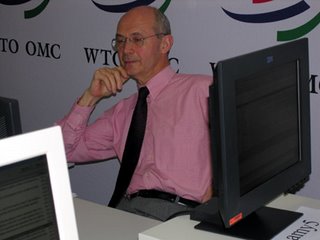
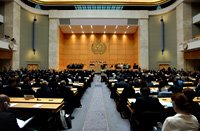
A European Parliament conference Tuesday heard cautions against the proposed law simply resulting in proxy advertising for the pharmaceutical industry. Secretary General of the Pharmaceutical Group of the European Union (PGEU), John Chave (pictured at right), is not convinced of the need for the legislation: "If, however, the laws are to be changed, it is of fundamental importance that public confidence in the integrity of the information provided is maintained. The pushing of information by the industry should never be a proxy form of promotion or advertising. The sole justification for change can only be to help patients and not to grant more commercial freedom to the pharmaceutical industry." In its submission to the public consultation, the PGEU identified problems with self-regulation in the industry, among other concerns.

Arguably, a reliance upon receiving information from the industry (and indeed the proprietors themselves), where that information still requires intepretation and application by the individual patient in those circumstances, is not conducive to the genuine accessibility of health information. Rather, patient information and autonomy with respect to medicines should issue from contact with health care professionals and access to adequate and effective primary health care, including pharmacists and physicians. The information is therefore available as to alternatives, rather than tied to the product.

Monday, October 13, 2008

Pharmaceutical Firms Pledge HIV/AIDS R&D for Resource-Poor

Last week, after meeting with pharmaceutical executives from 17 different firms, UN Secretary-General Ban Ki-moon announced that major pharmaceutical firms were pledging to invest more in research and development on HIV/AIDS treatments and diagnostic procedures for poorer and resource-limited regions, as well as prevention and vaccines.

Despite research developments and new products, inequities in access to medicines continue: "We noted that despite the gains, the epidemic continues to outstrip our best efforts. Only one-third of those who need antiretroviral treatment in low-and middle-income countries are getting it." The Millenium Development Goal 6 is specifically concerned with achieving universal access to HIV/AIDS medicine by 2010 and the halt of the spread of the disease by 2015.


The firms that met with the UN Secretary-General included Abbott Laboraties, which has been in the press for its controversial pricing of Norvir following the marketing of its newer drug, Kaletra.


Access to information is also an important factor in achieving these goals, and China is recognising the significance of data-sharing in disease control. An international team of researchers investigating HIV infections in southern China has been granted full access to government medical data, as reported in Nature. This transparency is advocated as part of China's overall strategy to reach its goal of limiting total infections to 1.5million by 2010.

Monday, August 11, 2008

Rising Drug Prices - The Real Devil in the Detail


Decisions not to supply certain drugs on national health schemes may be an inevitable consequence of a wider problem of rising prices for a growing number of patented medicines. The recent NICE preliminary decision to advise the UK National Health Service (NHS) against several high-priced treatments for advanced renal cell carcinoma was largely attributed to the high cost of these medicines.

In an article last week in USA Today it is suggested that a small number of prescription brand-name medicines in the US, still protected by patents, are being raised in price by 100-1000%. Overall, price rises last year were around 7.4% on average for brand-name drugs in the US.

While patents potentially preserve prices against oversight by conventional competition, pressure is coming from elsewhere. In December 2003, Abbott Laboratories Inc raised the price of the HIV/AIDS drug, Norvir (ritonavir), by just over 400% (from USD205.74 to USD 1028.71 for 120 capsules). In May of 2004, the US-based civil society coalition, Prescription Access Litigation (PAL) filed a class action lawsuit in Illinois state court against Abbott and in October 2004 filed a federal class action suit in the US District Court in California.

Only last week did Abbott agree to settle the lawsuit (the decision awaits approval and the final amount will depend upon the decisions of the 9th US Circuit Court of Appeals regarding the antitrust questions in the case).

But Abbott faces potentially larger damages in the lawsuit filed in October 2007 by pharmacies and wholesalers, and joined by competitor GSK. The case goes before the US District Court Judge Claudia Wilken next week.

The problem is a kind of pharmaceutical BlackBerry issue. Norvir, which received FDA approval in 1996, is a Protease Inhibitor (PI) and is an essential component in highly active anti-retroviral treatment (HAART) used to treat HIV/AIDS. Although initially marketed as a standalone PI, Norvir subsequently became more commonly used in low doses as a booster in HAART.

Abbott then introduced Kaletra around 4 years later as a fixed-dosed combination product and the only such product to include Norvir/ritonavir. The wholesale price of Norvir was then raised in 2003, but not that of Kaletra (despite containing ritonavir). Raising the price of Norvir effectively raised the price required to access the 8 out of 9 competitors' drugs that rely upon Norvir as the booster in HAART. Kaletra thus became a cheaper alternative, but not necessarily a medically-appropriate one for all candidates. The Kaletra patent does not expire until 2016.

According to reports in the San Jose Mercury News, San Franciso, internal memos at the time warned that if the price of Norvir was raised, Abbott would come off as the "big, bad, greedy pharmaceutical company."

As much as I wouldn't want to give up my BlackBerry, it seems the Norvir stranglehold puts quite a bit more at stake.


Saturday, August 09, 2008

NICE Won - High Prices and New Deals

This week in the UK the National Institute for Health and Clinical Excellence (NICE), which advises the National Health Service (NHS), proposed against further use of four treatments for advanced renal cell carcinoma that has spread from the primary tumour. A final decision on the proposal is not expected from the NHS until January.


NICE applies criteria for "cost-effectiveness" which the four drugs - Avastin (bevacizumab) owned by Genetech/Roche; Nexavar (sorafenib) owned by Bayer; Sutent (sunitinib) owned by Pfizer; and Torisel (temsirolimus) owned by Wyeth - did not fulfil.


The decision has been widely criticised as the drugs present the very few options for patients with this advanced renal cancer. Charities, including Cancer Research UK, have condemned the decision. And practitioners have raised concerns regarding the effectiveness of interferon as the only treatment option remaining. Professor John Wagstaff of the South Wales Cancer Institute told the Independent that there would be no point in referring patients as around 75% gain no real benefit from interferon. James Whale (pictured), broadcaster, was diagnosed with renal cancer in 2000 and told the Telegraph "If final guidance remains as it currently stands it will certainly mean an early death sentence for many."


However Professor Peter Littlejohns, Clinical and Public Health Director at NICE, has defended the decision in a BBC report, maintaining that providing these treatments would mean forgoing treatments for other patients in other areas.


GSK, on the other hand, is said to be working to alleviate pricing obstacles to NICE approval for the drug Tyverb, used in the treatment of breast cancer. In this case as well, NICE refused to adopt the new drug despite GSK's attempts to negotiate a "risk-sharing" arrangement with the Department of Health (DH) where the DH is charged only for the proportion of patients estimated to have received significant benefits from the treatment. The UK-based pharmaceutical company is now working towards a "price-volume" deal with the DH in order to resolve the concerns with cost.


The "price-volume" proposal presents an innovation in pricing where a cap is introduced on the total cost of the medicine to the NHS, regardless of the number of patients being treated (whether it is higher or lower than the cap). The fixed price will cover the cost of the drug for several thousand patients. This price would apply if fewer patients were recruited. The NHS will therefore benefit if it identifies a higher number of patients to receive the drug.


The Financial Times describes the GSK proposal as "pioneering" at a time when pharmaceutical companies are coming under increased pressure to address pricing obstacles to adequate delivery of healthcare and patented medicines. The proposal innovates upon a conventional business model to the company's benefit of greater overall sales and to the benefit of patients in greater access to new medicines.


But this might be a bridge too far for some and a deal too late for many.

Wednesday, August 06, 2008

Innovations in Access - Priority, Pools and Policy

Priority Review Voucher

Amendments to the US Food, Drug and Cosmetic Act Administration (FDA) come into effect next month, with the issue of the first priority review vouchers expected. The amendments, introducing these vouchers, were proposed to provide new incentives for research into neglected tropical diseases. The bill was introduced by Senators Sam Brownback (Republican, Kansas) and Sherrod Brown (Democrat, Ohio) in 2007 and signed by President Bush in September that year.


The Food and Drug Administration Amendments Act (HR 3580) amended Subchapter A of Chapter V of the Food, Drug and Cosmetic Act (21 USC 351, et seq) inserting Section 524 and introducing a system of priority review vouchers for companies seeking to register drugs and vaccines for neglected tropical diseases.

The effect of the voucher is to gain fast-track approval for other drugs that company may seek to register in the future, potentially reducing registration times by almost a year. Following Section 524(b)(3)(B), the first voucher may be expected 27 September, ie, one year on from the date of enactment (Presidential assent).

Regulatory delays are frequently cited by pharmaceutical companies as costly inefficiencies, thereby making a system to mitigate these delays very financially attractive to the industry. However, concerns have been raised. Although the vouchers ideally become important and valuable commodities to facilitate partnerships and to sell onto other companies and thus finance clinical trials for partnerships researching in these neglected diseases (amendments in June provided for the transferability of the vouchers), some have cautioned that the system will not necessarily drive new research. Rather, in some cases they will simply entice companies to seek US registration of drugs already on the market in other countries, with the benefit to the company of a very bankable voucher without the social benefit of new research. Others even doubt the value of the voucher, suggesting that the era of the blockbuster drug is over.

The research qualifying for vouchers might also be limited, with vouchers being available only for registration of drugs containing active ingredients not previously approved. This has been noted as a potentially serious limitation of the scheme, with no incentive for research into new uses for existing formulations and new combination therapies.


Patent Pools

Another significant initiative in access also in the press is that of patent pools. Following the briefing on the UNITAID Patent Pool at the 17th International AIDS Conference, currently underway in Mexico City, James Love explains the major features of the UNITAID patent pool:


  • the pool is created as a voluntary mechanism;

  • patent owners have the opportunity to identify the field of use for patents licensed to the pool;

  • patent owners may exclude countries to which the licence will not apply.


Patent pools are not new, one of the first dating back to the 19th century when a group of sewing machine competitors (including Singer) decided in 1856 to cross-licence rather than decimate their profits by suing each other. This kind of business model persists today and is arguably of very significant application when it comes to medicines.

The Universities Allied for Essential Medicines (UAEM) this week endorsed the scheme: "UNITAID steps forward as a visionary leader in the global fight against diseases affecting the poor." UAEM has called upon universities to endorse the scheme and to contribute to the scheme through consultation with present licensees and through reservations on future licences.

Generics remain instrumental in facilitating access to treatment in developing countries, and at a time when generics are credited as dominating the US Global AIDS initiative, concerns have been raised regarding the scope of the proposed Anti-Counterfeiting Trade Agreement (ACTA). In comments on the proposed agreement, the Generic Pharmaceutical Association (GPhA) urged the US Trade Representative (USTR) "not to allow the rising momentum behind a global anti-counterfeiting strategy to be diffused by deviating into expanded IP protection and enforcement with respect to patents and data exclusivity." Today, a sign-on letter was released by Essential Action and others, urging negotiators to publish the draft text together with pre-draft papers and criticising the ongoing secrecy of the negotiations.

Comments Invited on UK Policy in Access to Medicines

Meanwhile, research is currently taking place into UK Government policies on access to medicines, with consultation with industry, government departments and other stakeholders due to take place in the first half of September. The draft report, being prepared by Emma Back and Samia Saad, will be published in early October on which there will be further consultation later that month. The report will ultimately inform the subsequent edition of the UK's Good Practice Framework, to be managed by the Department for International Development (DFID) in conjunction with Business Enterprise and Regulatory Reform (BERR), Department of Health (DH) and the Intellectual Property Office (IPO).

Comments on key issues to consider and address are invited by the consultants. These should be provided in no more than two pages and no later than 22 August 2008. These may be sent directly to Emma Back (emma.back1@hotmail.com) and Samia Saad (samiasaad@gmail.com).

Friday, December 07, 2007

Geneva Workshop - Health and Patent Flexibilities


The WTO Workshop on TRIPS and Public Health in Geneva earlier this month included participation from 19 officials of developing countries.
Part of the WTO's technical cooperation and capacity-building activities, this workshop was particularly interesting for its emphais on the use of flexibilities in TRIPS for public health purposes.


In particular, the workshop delivered training on the August 2003 and December 2005 decisions, the so-called "paragraph 6 system" of compulsory licensing.

Participants came from including Argentina, Brazil, Cuba, the Gambia, Hong Kong China, India, Indonesia, Iran, Jamaica, Malaysia, Mali, Namibia, Peru, Philippines, Saudi Arabia, Singapore, Turkey, Vietnam and Zambia.

Indonesia, a participant at the workshop, has been at the forefront of recent initiatives in public health. The country is maintaining its stance against participation in the World Health Organisation (WHO) virus-sharing programme, refusing to share bird flu virus samples unless material transfer agreements can place conditions on the subsequent vaccine, including conditions on commercial use, pricing and the creation of intellectual property rights. The New Scientist reports that Jakarta has shared just two specimens this year, both from the tourist resort of Bali.
Public health has been on the agenda for a lot of the WTO's cooperation events recently, including a workshop in the Asia-Pacific in July this year.

Monday, January 22, 2007

Novartis in India - An Update


Novartis has been strongly criticised of late for its stance on production of generic versions of the leukaemia drug, Glivec, in India.

And now a petition has been launched by Medicins Sans Frontieres (MSF) to oppose the case and its potential to prevent the production of cheaper generic versions of the drug. In a press release, MSF International Council President, Dr Christophe Fournier, said, "This key source of medicines cannot be allowed to dry up."

In an earlier post, Novartis and the Challenge to Indian Patent Law, a background to the dispute was provided, together with a brief analysis of the claims.

Novartis had obtained exclusive marketing rights for 5 years for its cancer drug, Glivec (marketed as Gleevec in the US) , but because it was decided that the invention was not an invention, the exclusive marketing rights were withdrawn (new form of a known substance). Section 3(d) of the Indian Patents Act, which provides that "the mere discovery of a new form of a known substance which does not result in the enhancement of the known efficacy of that substance" will not be sufficiently inventive to warrant patentability. In other words, India is refusing to allow Swiss-type claims. And this is what Novartis wants to challenge, arguing that the law is not TRIPS compliant (Art 27(1)) and is unconstitutional. However, arguably TRIPS does not go as far as mandating the protection of new use, as discussed on IPMed previously. The case will be heard in Madras, 29 January.

To accompany the petition, MSF has also provided a backgrounder as well as a timeline for the case. Commentators have suggested that it may bring the same kind of pressure that saw the end to the South African litigation (which also involved Novartis among others) over HIV medicines in 2001.

Sunday, January 14, 2007

Ethical Pharmaceuticals

Best wishes for 2007 from all of us at IPMed.

While we have been on a brief break, an important development in the campaign on access to medicines and needs-based research has been announced.

Professor Sunil Shaunak
, Imperial College, and Professor Steve Brocchini, of the School of Pharmacy, University of London, have announced a new model of development and delivery, which they call "ethical pharmaceuticals." The researchers claim that by altering the molecular structure of essential expensive drugs, such as the drug for Hepatitis C, they will be able to develop and market a cheaper alternative, without infringing the original patent or involving pharmaceutical firms. Indeed, pharmaceutical companies have been relying upon such "second generation" innovation to extend the life of a profitable drug before the expiration of patent protection.

With Dr Mire Zloh of the School of Pharmacy, the researchers haved worked to improve the availability and lower costs of existing treatment for Hepatitis C. Dr Zloh has identified the interdisciplinary approach in the research as one of the key factors towards paradigmatic shifts and important developments towards the model for ethical pharmaceuticals. The Schering-Plough drug used to treat Hepatitis C is called PEG-Intron (PEGylated interferon), which means it has a polyethylene glycol (PEG) side-chain on the interferon molecule. The researchers are still using a pegylated interferon but, from the reports, have discovered a way of locating an additional side-chain (second generation pegylation) elsewhere on the molecule. This achieves a more pure modified interferon much more cheaply, effectively creating a "new medicine" that is not protected by the patent. However, the industry has suggested that such drugs will still require safety trials and may potentially result in "a huge intellectual property issue."

PolyTherics (Imperial College spin-out company) was developed to build upon the work of Shaunak and Brocchini, and has teamed with the Indian company, Shantha Biotechnics. In this way, Shaunak and Brocchini will be able to develop and market the TheraPEG without selling publicly funded research to "big pharma" to take to market. Speaking to the BBC, Professor Shaunak said, "We in academic medicine can either choose to use our ideas to make large sums of money for small numbers of people, or to look outwards to the global community and make affordable medicines."

Tuesday, November 14, 2006

Access to Medicine Ongoing Challenge for Poor


Oxfam has released today a Briefing Paper outlining how very little has changed to improve access to medicines since Doha. In the press release accompanying the publication, Oxfam says, "Poor people in developing countries are still being denied life-saving medicines five years after world leaders signed a formal trade declaration to put health before profits."

The Briefing Paper, entitled "Patents versus Patients: Five years after the Doha Declaration," maintains that trade rules continue to present a major barrier to genuine access to affordable medicines. The Paper describes patent protection as an ongoing obstacle to the delivery of cheaper generic versions to poor countries and calls for urgent action.

The Paper states "The Doha Declaration unequivocally recognises and clarifies that the TRIPS Agreement should not prevent WTO member countries from taking measures to protect public health," and "recognises the legitimate need of countries to take measures to reduce the price of medicines, such as using TRIPS safeguards." However, the "TRIPS-plus agenda" is seriously compromising the availability of such flexibilities and safeguards. In particular, the Briefing Paper criticises US trade policy and the emphasis on bilateral and regional free trade agreements as a way to ensure strong intellectual property protection despite the commitment to public health in the Doha Declaration. This is combined with what the paper describes as the indifference of other rich countries, where "all pharmaceutical companies selling medicines in a developing country, including European countries, benefit ... essentially 'free-riding' on US efforts to introduce TRIPS-plus rules."

The paper calls for new ways to promote patients over patents, noting the World Health Assembly Resolution of 2006 which established the inter-governmental working group. The World Health Organization (WHO) is tomorrow completing a public hearing in preparation for the meeting of the working group. Oxfam's paper focuses on several important cases, including the Glivec controversy.

The International Federation of Pharmaceutical Manufacturers & Associations (IFPMA) was reported in Reuters today as arguing that access to medicines is not the major public health issue in the developing world, but rather inadaquate infrastructure. But Ellen 't Hoen of Medecins sans Frontieres (MSF) was quoted as saying "The current system based on patents and high prices to pay for innovation leads to rationing and leaves huge health needs neglected."

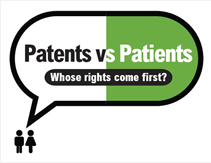
Oxfam is currently launching the Briefing Paper at BMA House in London, with highlights to be published at Patents vs Patients: Whose Rights Come First?

Friday, November 03, 2006

WHO Public Hearing - Engaging the Private for Urgent Public Good


The World Health Organization (WHO) is currently conducting an online Public Hearing to collect data and proposals from various stakeholders and actors, towards an analysis of intellectual property rights, innovation and public health. Running 1-15 November, the Public Hearing will accept contributions from a wide range of stakeholders and actors.

The contributions to the Public Hearing will be collected for the first official meeting (4-8 December) of the intergovernmental working group (IGWG), convened under Resolution WHA59.24, "Public health, innovation, essential health research and intellectual property rights: towards a global strategy and plan of action." Resolution WHA59.24 was adopted at the 59th World Health Assembly, after consideration of the recommendations of the WHO Commission on Intellectual Property Rights, Innovation and Public Health (CIPIH), which concluded with its report in April 2006.

The IGWG is open to all interested Member States, and IP-Watch reports that the WHO will also invite a wide range of observers, UN organisations, intergovernmental and nongovernmental organisations, as well as experts and selected public and private entities.

The IGWG will collect the data and proposals from various stakeholders through this Public Hearing and prepare an analysis of intellectual property rights, innovation and public health, to be submitted to the 61st World Health Assembly, to be held in May 2008. This analysis will develop a global strategy for sustainable needs-driven health research and development, with particular attention to those diseases affecting developing countries.

Some of these major diseases are those caused by helminth infections. Earlier this month, the WHO published guidelines on Preventive Chemotherapy in Human Helminthiasis, examining large-scale prevention and treatment programmes in helminth infections causing schistosomiasis or bilharzia, diseases which are disproportionately high in developing countries. The manual sets out the new strategy to fight these infections, involving a partnership of more than 25 organisations. As well as a significant public health concern, the WHO has also identified serious considerations with respect to human rights, in that sufferers are often ostracised and stigmatised as a result of these infections and the effects on the body. In the accompanying press release to the publication, Dr David Heymann, WHO Acting Assistant Director-General for Communicable Diseases, said that treatment and prevention of these diseases is urgent and "incontestable from all perspectives: moral, human rights, economic and global public good. The task is feasible and must be done."

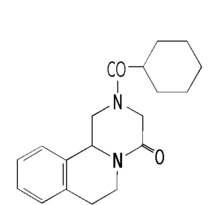
Pharmaceutical companies and private donors "make good the gap" in delivering the support to poorer countries, as reported in the Financial Times (FT) earlier this month. According to the FT, all the drugs required for these are diseases are donated, except Praziquantel (for the treatment of bilharzia, formula at right). Merck manufactures the drug, and Bayer markets the drug for veterinary use. WHO has been in negotiations with both for some time, but to date there had been no agreement to provide the drug.

However, Merck is now co-operating with the WHO towards the production by 2008 of drugs to treat bilharzia at less than half the market cost, following reports of increased "pressure" on Bayer and Merck to donate "for human use a drug they sell for pets." Professor Lorenzo Savioli, Director of the WHO Department of Control of Neglected Tropical Diseases, said to the FT that the renewed action and fresh requests to the companies are in response to "a real market failure because schistosomiasis affects the poorest of the poor. But Bayer tells us to talk to Merck, and Merck says talk to Bayer."

The FT reports that Merck was approached by the WHO early this year in Spring, but that supplies were presently too small and production costs too high to allow for a viable mechanism to supply the drug at the costs and quantities required.

The FT also reports that Bayer originally helped develop praziquantel with WHO support in the 1970s for the treatment of patients in Africa. However, Bayer concluded that it could not produce the drug so that it would be affordable. Bayer's public profile, much maligned following the GM contamination of US rice imports, is unlikely to be assisted by what the FT reports as its reluctance to participate in initiatives to achieve distribution of the drug in Africa.

Meanwhile, Pfizer is providing open access to its library of 3 million chemical compounds to WHO-affiliated researchers on tropical diseases. Initially, access was granted to 12 000 compounds for the treatment of helminth infections and related concerns. The intellectual property rights arising from such programmes, however, are not clear, as no decision has been made on what will happen to any promising developments.

Tuesday, October 31, 2006

UK R&D Scoreboard 2006 - GSK Lifts UK R&D, But Size Does Matter


The UK Department of Trade and Industry (DTI) has just released the figures for the 2006 R&D scoreboard.

The R&D Scoreboard 2006 provides information on the top 800 UK and top 1250 global companies based on R&D investment. The meaning of R&D for the Scoreboard is found in the UK in the Standard Statement of Accounting Practice (SSAP 13), which defines the concept based on the different definitions used by the Organisation for Economic Co-operation and Development (OECD) Frascati manual on expenditure for research and development. For global companies the International Accounting Standard (IAS 38) is used, also based on the Frascati manual.

The SSAP provides the definition of expenditure falling into one or more of the categories of pure or basic research, applied research, and development. The third category is particularly relevant to associated measurements of patent activity, in that it covers the "use of scientific or technical knowledge in order to produce new or substantially improved materials, devices, products ..."

72 UK companies made it into the Global 1250, with an increase in UK R&D expenditure (including 245 foreign owned companies) to £19.2bn (£17bn in 2005). This has been attributed to greater disclosure as well as an increase in R&D, which is particularly strong in pharmaceuticals in the UK. The previous decrease in UK 800 expenditure (1% decrease in 2005) has been replaced by an increase of 4% in 2006. GlaxoSmithKline (GSK) reported one of the larges, at £297million.

But others have criticised the increase as "distorted," pointing to the new accounting rule that insists on greater levels of disclosure in sectors not traditionally driven by or associated with R&D, such as banking. DTI senior industrialist and lead author of the report, Mike Tubbs (pictured right), in a report in The Independent, said "For the first time we had R&D from these companies. We knew they did R&D but we did not know it was that much." But a report in The Times suggests instead that "Britain is losing ground."

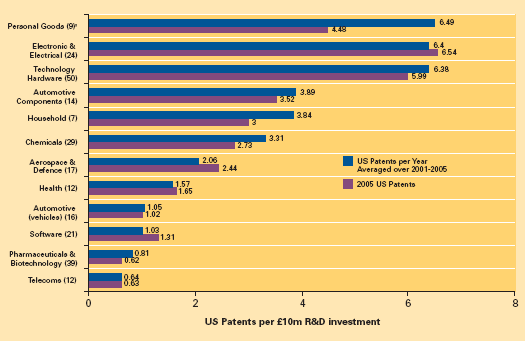
The Scoreboard for the Global 1250 shows that the pharmaceutical sector (along with software) is one of the fasting growing sectors with highest profitability. But it is second place in R&D, just behind technology hardware, putting 6 pharmaceutical companies in the top 20 (compared to none just 10 years ago). However, the number of patents granted per £10million is much lower than those for technology hardware and electronics.

The patent-to-R&D ratio for 12 sectors

According to the Scoreboard, around a quarter of the Global 1250 companies are mid-sized (sales of £50-500 million) with pharmaceutical companies making up 3/4 of these. Pharmaceuticals are the dominant sector in the UK, with the UK having the second largest proportion of pharmaceutical companies of all the top 7 R&D countries (with US having the greatest). Because the UK is particularly strong in pharmaceuticals, the report states that this explains why the UK does not have any companies in the top 20 for 2005 US patents.

Although the centenarian, GSK, is now the second-largest pharmaceutical company in the world (behind Pfizer), but a report in today's IP-Watch suggests that there is a distinct market advantage for small and medium-sized pharmaceuticals (SMEs) when it comes to neglected diseases and diseases in developing countries. Reporting on a seminar at the headquarters of the World Intellectual Property Organization (WIPO), co-organised with the Stockholm Network, IP-Watch notes the importance of "creative licensing deals" and cooperation with larger pharmaceutical companies. On patenting, Nikolaus Thumm, senior economic counsellor of the Swiss Federal Institute of Intellectual Property, told the meeting that there is a need to correct the "common misunderstanding" that the stronger the protection, the more innovation.

Wednesday, October 25, 2006

Competition Inquiry into Johnson / Pfizer Deals


The European Commission has commenced a competition inquiry into Johnson & Johnson's planned acquisition of Pfizer's consumer health interests.

The Commission's Competition Directorate will decide at the end of next month whether the sale can proceed or whether a full-scale investigation is warranted. If the latter route is taken, this will delay the process by a further 90 days.

The proposed deal was announced in June this year and will result in Johnson & Johnson having a substantial monopoly over consumer health products. Jonathan Todd, speaking for the Commission's Competition Directorate, was quoted in an article in The Times saying, "Our concern is whether or not there may be an adverse effect on consumers, pricing and competition."

Earlier this month it was reported that US anti-trust regulators forced Johnson & Johnson and Pfizer to agree to sell Zantac (to Boehringer-Ingelheim Pharmaceuticals, for US$509.5M), after there were concerns that this product overlapped with some Pfizer products.

Meanwhile, as reported in the Financial Times last week, Lloydspharmacy has asked the Office of Fair Trading (OFT) in the UK to investigate Pfizer's exclusive agreement with UniChem to act as a single distributor for its drugs in the UK. UniChem is part of Alliance Boots, which also runs the large rival pharmacy chain, Boots.

Pfizer claims that the deal is to control the supply chain in a fight against counterfeit drugs, but after the expiration of patent protection for several of its key sellers - including Zythromax (antibiotic), Diflucan (antifungal), and Zoloft (antidepressent) - the agreement seems to be equally about limiting competition from cheaper, generic versions. Other British pharmacies and drug distributors are concerned that this will lead to an anti-competitive monopoly, adversely affecting consumers with higher prices. According to a recent report in the Financial Times, Pfizer's drugs account for around 15% of the UK's £10.3 billion pharmaceutical market. Furthemore, pharmacies will be forced to use UniChem as the exclusive provider of Pfizer's branded drugs, leading to concerns that Pfizer will be able to control the discounts available to retailers as well.

James Harding, in an opinion piece in the The Times, suggests that public scrutiny will exonerate Pfizer, but he is correct to note that important questions being asked, "Is Pfizer just hyping up the counterfeits argument in order to cut out competition and take control of pricing?" and "Will UniChem provide as reliable a service to other pharmacies as it does to its own Boots stores?" In other words, the Pfizer-UniChem agreement will in effect control each level of the chain, right down to the deals with individual retailers themselves. By "taking a risk," Harding seems to think Pfizer is exonerated. But surely that is the nature of the entrepreneurial business models - taking risks pays much higher dividends. It is not clear that the risk of Pfizer grazing a knee if UniChem stumbles will be a sufficient check and balance against the potentially anti-competitive nature of this deal.

The British Association of Pharmaceutical Wholesalers (BAPW), the main trade body in the UK, is likely to make a similar complaint with the OFT. The Chairman of BAPW, Ian Brownlee, said to The Times, "With a single supplier the delivery system cannot ensure that pharmaceutical products are there in the dispensary when they are needed. Profit is being put before patient safety with a breathtaking arrogance." UniChem is one of its members.

Monday, October 23, 2006

EU Council Adopts EC Regulation on Paediatric Medicines


The Council of the European Union (EU) announced today that it has adopted the EC Regulation on medicinal products for paediatric use.

Today's press release states that the new Regulation aims to improve child health, as considered in more detail in earlier background material accompanying the original proposal. The Regulation sets out specific requirements for the authorisation and use of medicines in children, in response to a concern that around 50% of medicines used to treat children are in fact not tested or authorised on children. The improvement to the health of children in Europe is said to be likely to come from better research, development and authorisation of paediatric medicines. The new Regulation creates a new system through various strategies, which are stated as aimed at achieving better availability of paediatric medicines throughout the Community and removing obstacles to trade of medicinal products within the Community.

As well as dealing with the appropriate standards of research, clinical trial, and authorisation, the Regulation also looks to improve information on the use of paediatric medicines. Obligation in this area are to be accompanied by certain incentives created in the Regulation.

Of particular interest is the incentive with respect to medicines still protected by monopoly (patent or supplementary protection certificate (SPC)). The Regulation introduces new obligations to submit (as part of the procedure for market authorisation) results of clinical studies in accordance with a paediatric investigation plan or proof of a waiver where the medicines of no paediatric use. These obligations are accompanied by an incentive in the form of the extension of exclusive rights (an additional 6 months) on the basis that it takes longer to test and authorise paediatric medicines. In the case of SPCs, extensions are available only for products authorised in all Member States and for which marketing authorisation procedures are complete.

In the drafts leading to final text, discussions rejected proposals to exclude extensions for products that have already received the protection of data or market exclusivity for the same paediatric use in the EU. Similarly, the Commission rejected earlier drafts seeking to amend the proposed text to exclude an extension of the SPC for products that have already benefited from patent protection covering the paediatric use. The Commission claimed that such exclusions would compromise the policy objective of encouraging greater research into medicines for children. Nevertheless, in keeping with this rationale, importantly the extensions are available as an incentive only for research entered into after the new Regulation has entered into force.

However, in May this year, the European Court of Justice (ECJ) ruled out SPCs for new formulations of known active ingredients, in the Massachusetts Institute of Technology (C-431/04). This was despite an earlier opinion of the Advocate-General. The Court ruled: "Article 1(b) of the Regulation must be interpreted so as not to include in the concept of 'combination of active ingredients of a medicinal product' a combination of two substances, only one of which has therapeutic effects of its own for a specific indication, the other rendering possible a pharmaceutical form of the medicinal product which is necessary for the therapeutic efficacy of the first substance for that indication." This may limit the incentive in respect of extensions of SPCs for new uses (paediatric) of known products.

Regarding off-patent paediatric medicines, the Regulation introduces a new kind of marketing authorisation, referred to as the Paediatric Use Marketing Authorisation (PUMA). Such medicines must have been appropriately tested for paediatric use. The Regulation also includes provisions on the funding of research into the use of off-patent medicines for paediatric purposes.

Medicinal products for the treatment of serious diseases affecting fewer than 5 in 10 000 people in the Community are often referred to as "orphan drugs," because of their limited interest to the pharmaceutical industry. The Orphan Drug Regulation currently provides for 10 years market exclusivity, in order to provide incentives to bring such treatments to market, which the new Regulation is expected to extend to 12.

The Regulation also creates a new scientific committee, an expert committee within the European Medicines Agency (EMEA). This Committee will be primarily responsible for the assessment and agreement of paediatric investigation plans and waivers (described above).

The new Regulation amends 3 European instruments - Council Regulation (EEC) No 1768/92 creating supplementary protection certificate; Regulation (EC) No 726/2004 for authorisation and supervision of medicinal products for human and veterinary use (establishing the EMEA); and the Clinical Trials Directive 2001/20/EC. The original proposal text and amended text are available. The text of the adopted Regulation is likely to be published in the Official Journal in the next couple of weeks.

Saturday, October 21, 2006

Novartis and the Challenge to Indian Patent Law - Global Pharmaceutical Policy


At the recent 23rd Assembly of the International Federation of Pharmaceutical Manufacturers & Associations (IFPMA), held in Geneva, it was announced that a new code of marketing ethics is to be launched next year, according to a report in IP-Watch. But current events possibly raise questions as to how effective any code might be in the face of what is sometimes described as the litigation "business model."
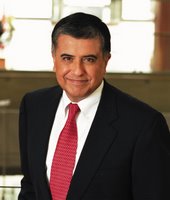
Presenting a keynote to the meeting, Mr Fred Hassan (pictured at right), Chairman and CEO of Schering-Plough and the new President of IFPMA, declared that IFPMA has made significant progress on marketing and clinical activities. He noted the voluntary guidelines developed and used in the US, and explained that implementation is now more important than strategies.

On clinical trials, Mr Hassan noted the IFPMA initiative in delivering public information. Earlier this year, IFPMA launched the second stage of the Clinical Trials Portal, developed with IBM. According to the background information provided by IFPMA, the aim of the service is to facilitate public access to pharmaceutical clinical trial data. The portal will operate as an internet search engine, allowing patients to locate information to clinical trials, both completed and in progress, and is sponsored by originator (as opposed to generic) pharmaceutical companies around the world. The portal searches the listings (registries) of on-going clinical trials and the results of completed clinical trials. IFPMA maintains that the presentation of results is "in a standard, non-promotional, summary format."

The 1st Stage of the Clinical Trials Portal was launched in September last year, but the Stage 2 upgrade allows greater functionality, including search criteria in French, German, Japanese, and Spanish, as well as the original English of Stage 1. The 2nd Stage also offers a more advanced search function as well as the use of the MedDRA and MeSH medical dictionaries to provide multilingual synonyms.

In his keynote, Mr Hassan importantly identified 4 significant obstacles to improving health care: "barriers to access," "barriers to innovation," regulatory systems, and the "barrier to openness, transparency and accountability." To overcome the first obstacle, Mr Hassan argued for improved access to health education and information as well as new interventions. On the latter, however, the critical obstacle was seen to be administrative, including that of regulatory delays (in the approval and registration of new drugs), and practices with respect to patent monopolies were not really addressed. Indeed, in comments on "barriers to innovation," intellectual property was described as "the engine of innovation." Mr Hassan argued that "only a handful of countries contribute the innovation that drives improved health care throughout the world. The US carries a disproportionate load." The new President looked to "Private entrepreneurship and risk-taking, in open markets" as the mechanism to improve innovation and resource allocation and said the "the protection of intellectual property" is "absolutely critical."
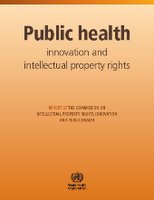
Indeed, earlier this year, in response to the first report of the World Health Organization (WHO) Commission on Intellectual Property Rights, Innovation and Public Health (CIPIH). The Report, entitled Public Health: Innovation and Intellectual Property Rights, generated a strong response from IFPMA, which expressed concern that the Report "surprisingly recommends that developing countries should make use of compulsory licensing," and criticised the Report as underestimating the role of patents. Ellen 't Hoen, from Medicins sans Frontieres (MSF) Access to Essential Medicines Campaign, however, welcomed the report. Writing in the WHO Bulletin, she described the report as presenting "a wealth of evidence and analysis in support of the view that the current system of drug development is fundamentally flawed and leaves huge health needs unmet."

Mr Hassan succeeds Dr Daniel Vasella (pictured left), Chairman and CEO of Novartis and IFPMA President 2004-2006.

Novartis has come under criticism lately, in its challenge to Indian patent law. Novartis had obtained exclusive marketing rights for 5 years for its cancer drug, Glivec (marketed as Gleevec in the US) a temporary monopoly until the Examiner submits a report on the invention (Patents Act, Chapter IVA). However, because it was decided that the invention was not an invention, the exclusive marketing rights were withdrawn. The application failed for lack of inventive step (obviousness) because it was a new form of a known substance. The refusal (analysed in an article by Manisha Singh Nair) was made on a number of grounds. But a substantial basis was provided by Section 3(d) of the Indian Patents Act, which provides that "the mere discovery of a new form of a known substance which does not result in the enhancement of the known efficacy of that substance" will not be sufficiently inventive to warrant patentability. In other words, India is refusing to allow Swiss-type claims.

Under the 2005 amendments to Indian patent law (to become TRIPS compliant), every application for exclusive marketing rights is treated as a request for examination. Further, any person or group may now file a pre-grant opposition. In this case, the Cancer Patients Aid Association and several generic pharmaceuticals (including Natco) did so in the Chennai patent office, on behalf of cancer patients.

In response, Novartis filed in May 2006, claiming that Indian patent law is unconstitutional and also contravenes international trade rules, taking the complaint to the Madras High Court, which sits in Chennai. A press officer from Novartis, speaking to IP-Watch, described the action as evidence of "Novartis' strong commitment to defending international intellectual property standards and its right to obtain patents for its innovative compounds under the World Trade Organization Agreement on Trade-Related Aspects of Intellectual Property Rights (TRIPS)." Daniel Vasella also spoke to IP-Watch, saying that the litigation was "a question of principle," and that unless Novartis pursues this it "would undermine the whole system."

According to Reuters, Novartis is claiming that Section 3(d) is not TRIPS-compliant. However, Article 27(1) of TRIPS arguably does not go so far as to mandate the protection of new use, or to define what a country must protect as an invention. It simply says, "all fields of technology, provided that they are new, involve an inventive step and are capable of industrial application." The exclusions relate to subject matter (methods, plants and animals) and such exclusions are included in the European Patent Convention (EPC), Article 52. On the other hand, a Swiss-type claim is a known product. It could be argued that this therefore forms the state of the art, and therefore Swiss type claims may be refused by countries on the basis that they are not new. Indeed, Swiss type claims are dealt with under Section 2(6) of the UK Patents Act 1977, further indicating that they are a matter of novelty. The Indian Act, however, excludes "new use of a known substance" in Section 3, "What Are Not Inventions."

The Berne Declaration (BD), a Swiss non-governmental organisation, has made a statement that section 3(d) is in compliance with TRIPS. Further, BD states that each member is entitled to introduce a patent regime compatible with its socio-economic context provided they are compliant with the minimum standards of TRIPS (Art 8), a view supported by the 2001 Doha Declaration on TRIPS and Public Health (Doha). The BD cites the WHO CIPIH Report as supporting this view. On page 34, the report states: "countries may devise their patent systems to seek teh best balance, in their own circumstances, between benefits and costs. Thus developing countries may determine in their own ways the definition of an invention, the criteria for judging patentability ... provided these are consistent with the relevant articles of TRIPS." Further, the report importantly states that, "Under TRIPS they may also exempt from patentability ... new indications of known products which amount to a therapeutic method."

Ellen 't Hoen said to IP-Watch, "This has South Africa written all over it" and has said in an MSF press release, "If Novartis' challenge against the Inidan patent law is successful, a key safeguard that can protect the production of affordable medicines will be lost." As the Times of India has reported, the cost of one month's supply of Glivec is Rs 1.10 lakh (Rs 110 000), whereas a generic equivalent is available for Rs 1100.

Civil society organisations in Switzerland, led by BD, have sent an open letter to Mr Vasella, in which 22 organisations and personalities demanded the withdrawal of the legal action. Those endorsing the letter includeed MSF Suisse, medicuba, Association of European Cancer Leagues (ECL), CO-OPERAID, and, in a private capacity, Mrs Ruth Dreifuss, former Swiss cabinet minister and Chairperson of the CIPIH, WHO. But in response to the letter, John Gilardi of Novartis has told swissinfo that "It's important that we applaud the efforts India has made to improve its intellectual property protection, but this is about ensuring that a patent for Glivec, which is recognised in over 40 countries, is also recognised in India." According to the article, Mr Gilardi claimed that Indian patent law clearly exceeded the flexibilities available. Along the lines of Mr Hassan's statement that intellectual property laws are the "engine of innovation," Mr Gilardi told swissinfo "Without a reward for innovation, there will be no innovation."

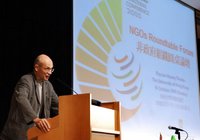
The IFPMA meeting also included a keynote presentation by Pascal Lamy Director-General of the World Trade Organization (WTO) (pictured at left, speaking at the 6th Ministerial Conference, Hong Kong, NGOs Roundtable Forum). Mr Lamy has recently spoken on the "bilateral disease" of free trade agreements, and the EU's troubling emphasis on bilateral deals. In his address to IFPMA, Mr Lamy said "I am convinced that there is no acceptable alternative to completing the Doha Round." As recently reported in the Financial Times (12 Oct, "WTO head flags trade rules"), Mr Lamy told the meeting that the WTO had not received a single notification of a developing country issuing a compulsory licence, suggesting that the current flexibilities are too complex to be used in practice. "To be frank," he said, "I see that as a problem."

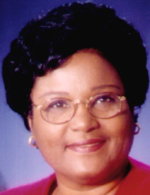
The WHO CIPIH Report has also noted the "emerging development" of the "growning number of bilateral and free trade agreements which include higher standards of protection that erode these flexibilities" considered earlier. And even EU business is wary of bilaterals. Speaking at UNICE, Michael Treschow, President of the Confederation of Swedish Enterprise, recently told the Financial Times (18 Oct, "Ericsson chief warns EU") that "It is not countries that do business with countries but companies that do business with companies." Peter Mandelson, European Commissioner for External Trade, defended bilaterals and rejected stories of his "clash" with Africa-Caribbean-Pacific (ACP) countries in an address to the European Socialist Party Conference on Economic Partnership Agreements, last Thursday. This is despite recent press that ACP countries will reject trade deals with the EU. In an article in FT Europe, Dame Billie Miller (pictured at right) Barbados trade negotiator, criticised Mr Mandelson's emphasis "economic partnership agreements" as pure trade negotiations. She said, "For us the development dimension is critical. We made our concerns known but the Commission has continued to talk the talk."

Pascal Lamy hosted an online chat last Wednesday, attracting around 150 questions on the Doha Round and the future of the WTO. The many questions in the transcript include discussions on multiculturalism in trade, life patents, controls on bilateral agreements, and the future of the Doha Round.