Showing posts with label Development. Show all posts

Friday, December 07, 2007

Geneva Workshop - Health and Patent Flexibilities


The WTO Workshop on TRIPS and Public Health in Geneva earlier this month included participation from 19 officials of developing countries.
Part of the WTO's technical cooperation and capacity-building activities, this workshop was particularly interesting for its emphais on the use of flexibilities in TRIPS for public health purposes.


In particular, the workshop delivered training on the August 2003 and December 2005 decisions, the so-called "paragraph 6 system" of compulsory licensing.

Participants came from including Argentina, Brazil, Cuba, the Gambia, Hong Kong China, India, Indonesia, Iran, Jamaica, Malaysia, Mali, Namibia, Peru, Philippines, Saudi Arabia, Singapore, Turkey, Vietnam and Zambia.

Indonesia, a participant at the workshop, has been at the forefront of recent initiatives in public health. The country is maintaining its stance against participation in the World Health Organisation (WHO) virus-sharing programme, refusing to share bird flu virus samples unless material transfer agreements can place conditions on the subsequent vaccine, including conditions on commercial use, pricing and the creation of intellectual property rights. The New Scientist reports that Jakarta has shared just two specimens this year, both from the tourist resort of Bali.
Public health has been on the agenda for a lot of the WTO's cooperation events recently, including a workshop in the Asia-Pacific in July this year.

Monday, January 22, 2007

Novartis in India - An Update


Novartis has been strongly criticised of late for its stance on production of generic versions of the leukaemia drug, Glivec, in India.

And now a petition has been launched by Medicins Sans Frontieres (MSF) to oppose the case and its potential to prevent the production of cheaper generic versions of the drug. In a press release, MSF International Council President, Dr Christophe Fournier, said, "This key source of medicines cannot be allowed to dry up."

In an earlier post, Novartis and the Challenge to Indian Patent Law, a background to the dispute was provided, together with a brief analysis of the claims.

Novartis had obtained exclusive marketing rights for 5 years for its cancer drug, Glivec (marketed as Gleevec in the US) , but because it was decided that the invention was not an invention, the exclusive marketing rights were withdrawn (new form of a known substance). Section 3(d) of the Indian Patents Act, which provides that "the mere discovery of a new form of a known substance which does not result in the enhancement of the known efficacy of that substance" will not be sufficiently inventive to warrant patentability. In other words, India is refusing to allow Swiss-type claims. And this is what Novartis wants to challenge, arguing that the law is not TRIPS compliant (Art 27(1)) and is unconstitutional. However, arguably TRIPS does not go as far as mandating the protection of new use, as discussed on IPMed previously. The case will be heard in Madras, 29 January.

To accompany the petition, MSF has also provided a backgrounder as well as a timeline for the case. Commentators have suggested that it may bring the same kind of pressure that saw the end to the South African litigation (which also involved Novartis among others) over HIV medicines in 2001.

Thursday, January 18, 2007

Nigerian Law to Increase Local Production of Essential Medicines


Nigeria is about to pass a law to allow local manufacturers to produce drugs to treat malaria and HIV/AIDS, two of Nigeria's most deadly diseases, according to a recent Reuters report.

According to the report, current production levels of necessary drug treatments are insufficient. At present, 14 companies in Nigeria are producing anti-retroviral (ARVs) for the treatment of HIV/AIDS and 8 are producing artemisinin-based combination therapies (ACTs) for the treatment of malaria. At the current levels of production, local companies are able to meet only 30% of the demand for malaria drugs, the rest being supplied by imports from China. Artemisinin (chemical formula at right) is extracted from Artemesia annua, mostly grown in China, but Chinese experts are advising programmes to grow the plant in Nigeria to meet higher production levels.

Ahmed Abdulkadir, special adviser to the Nigerian president, heads a taskforce to produce the essential medicines. In an interview with Reuters, during an anti-malaria conference in China, Abdulkadir said, "We will try to have the legislation passed. We've done all administrative work, it's at the final stage." He said further, "We will dismantle all those barriers so that our local industries are able to produce all of these drugs," explaining that local drug companies were preparing for increased production levels following the passage of the new law. As well as lessening the need for imports, Abdulkadir explains that the law would allow Nigeria to supply west and central Africa.

The World Health Organization (WHO) reports that between 300 and 500 million people contract malaria every year (map at right), with over a million fatalities (1 person every 30 seconds). The vast majority of these deaths (90%) occur in Africa, and most of the victims are children.

The WHO also reports that there were 4.3 million new infections of HIV/AIDS in 2006, with 2.8 million (68%) occurring in sub-Saharan Africa. In 2006, 2.9 million people died from AIDS related illnesses. In Nigeria, largely due to the HIV/AIDS epidemic, there has been a decrease in average life expectancy since 1991, to just 45/46 years (m/f).

Aldulkadir says that the WHO (of which Nigeria became a member in 1960) insists developing countries are given access to these essential medicines, "and that is what we are trying to make sure we have."

Tuesday, November 14, 2006

Access to Medicine Ongoing Challenge for Poor


Oxfam has released today a Briefing Paper outlining how very little has changed to improve access to medicines since Doha. In the press release accompanying the publication, Oxfam says, "Poor people in developing countries are still being denied life-saving medicines five years after world leaders signed a formal trade declaration to put health before profits."

The Briefing Paper, entitled "Patents versus Patients: Five years after the Doha Declaration," maintains that trade rules continue to present a major barrier to genuine access to affordable medicines. The Paper describes patent protection as an ongoing obstacle to the delivery of cheaper generic versions to poor countries and calls for urgent action.

The Paper states "The Doha Declaration unequivocally recognises and clarifies that the TRIPS Agreement should not prevent WTO member countries from taking measures to protect public health," and "recognises the legitimate need of countries to take measures to reduce the price of medicines, such as using TRIPS safeguards." However, the "TRIPS-plus agenda" is seriously compromising the availability of such flexibilities and safeguards. In particular, the Briefing Paper criticises US trade policy and the emphasis on bilateral and regional free trade agreements as a way to ensure strong intellectual property protection despite the commitment to public health in the Doha Declaration. This is combined with what the paper describes as the indifference of other rich countries, where "all pharmaceutical companies selling medicines in a developing country, including European countries, benefit ... essentially 'free-riding' on US efforts to introduce TRIPS-plus rules."

The paper calls for new ways to promote patients over patents, noting the World Health Assembly Resolution of 2006 which established the inter-governmental working group. The World Health Organization (WHO) is tomorrow completing a public hearing in preparation for the meeting of the working group. Oxfam's paper focuses on several important cases, including the Glivec controversy.

The International Federation of Pharmaceutical Manufacturers & Associations (IFPMA) was reported in Reuters today as arguing that access to medicines is not the major public health issue in the developing world, but rather inadaquate infrastructure. But Ellen 't Hoen of Medecins sans Frontieres (MSF) was quoted as saying "The current system based on patents and high prices to pay for innovation leads to rationing and leaves huge health needs neglected."

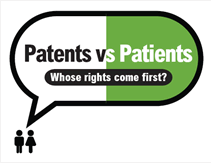
Oxfam is currently launching the Briefing Paper at BMA House in London, with highlights to be published at Patents vs Patients: Whose Rights Come First?

Friday, November 03, 2006

WHO Public Hearing - Engaging the Private for Urgent Public Good


The World Health Organization (WHO) is currently conducting an online Public Hearing to collect data and proposals from various stakeholders and actors, towards an analysis of intellectual property rights, innovation and public health. Running 1-15 November, the Public Hearing will accept contributions from a wide range of stakeholders and actors.

The contributions to the Public Hearing will be collected for the first official meeting (4-8 December) of the intergovernmental working group (IGWG), convened under Resolution WHA59.24, "Public health, innovation, essential health research and intellectual property rights: towards a global strategy and plan of action." Resolution WHA59.24 was adopted at the 59th World Health Assembly, after consideration of the recommendations of the WHO Commission on Intellectual Property Rights, Innovation and Public Health (CIPIH), which concluded with its report in April 2006.

The IGWG is open to all interested Member States, and IP-Watch reports that the WHO will also invite a wide range of observers, UN organisations, intergovernmental and nongovernmental organisations, as well as experts and selected public and private entities.

The IGWG will collect the data and proposals from various stakeholders through this Public Hearing and prepare an analysis of intellectual property rights, innovation and public health, to be submitted to the 61st World Health Assembly, to be held in May 2008. This analysis will develop a global strategy for sustainable needs-driven health research and development, with particular attention to those diseases affecting developing countries.

Some of these major diseases are those caused by helminth infections. Earlier this month, the WHO published guidelines on Preventive Chemotherapy in Human Helminthiasis, examining large-scale prevention and treatment programmes in helminth infections causing schistosomiasis or bilharzia, diseases which are disproportionately high in developing countries. The manual sets out the new strategy to fight these infections, involving a partnership of more than 25 organisations. As well as a significant public health concern, the WHO has also identified serious considerations with respect to human rights, in that sufferers are often ostracised and stigmatised as a result of these infections and the effects on the body. In the accompanying press release to the publication, Dr David Heymann, WHO Acting Assistant Director-General for Communicable Diseases, said that treatment and prevention of these diseases is urgent and "incontestable from all perspectives: moral, human rights, economic and global public good. The task is feasible and must be done."
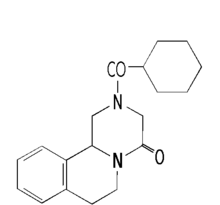
Pharmaceutical companies and private donors "make good the gap" in delivering the support to poorer countries, as reported in the Financial Times (FT) earlier this month. According to the FT, all the drugs required for these are diseases are donated, except Praziquantel (for the treatment of bilharzia, formula at right). Merck manufactures the drug, and Bayer markets the drug for veterinary use. WHO has been in negotiations with both for some time, but to date there had been no agreement to provide the drug.

However, Merck is now co-operating with the WHO towards the production by 2008 of drugs to treat bilharzia at less than half the market cost, following reports of increased "pressure" on Bayer and Merck to donate "for human use a drug they sell for pets." Professor Lorenzo Savioli, Director of the WHO Department of Control of Neglected Tropical Diseases, said to the FT that the renewed action and fresh requests to the companies are in response to "a real market failure because schistosomiasis affects the poorest of the poor. But Bayer tells us to talk to Merck, and Merck says talk to Bayer."

The FT reports that Merck was approached by the WHO early this year in Spring, but that supplies were presently too small and production costs too high to allow for a viable mechanism to supply the drug at the costs and quantities required.

The FT also reports that Bayer originally helped develop praziquantel with WHO support in the 1970s for the treatment of patients in Africa. However, Bayer concluded that it could not produce the drug so that it would be affordable. Bayer's public profile, much maligned following the GM contamination of US rice imports, is unlikely to be assisted by what the FT reports as its reluctance to participate in initiatives to achieve distribution of the drug in Africa.

Meanwhile, Pfizer is providing open access to its library of 3 million chemical compounds to WHO-affiliated researchers on tropical diseases. Initially, access was granted to 12 000 compounds for the treatment of helminth infections and related concerns. The intellectual property rights arising from such programmes, however, are not clear, as no decision has been made on what will happen to any promising developments.

Tuesday, October 31, 2006

UK R&D Scoreboard 2006 - GSK Lifts UK R&D, But Size Does Matter


The UK Department of Trade and Industry (DTI) has just released the figures for the 2006 R&D scoreboard.

The R&D Scoreboard 2006 provides information on the top 800 UK and top 1250 global companies based on R&D investment. The meaning of R&D for the Scoreboard is found in the UK in the Standard Statement of Accounting Practice (SSAP 13), which defines the concept based on the different definitions used by the Organisation for Economic Co-operation and Development (OECD) Frascati manual on expenditure for research and development. For global companies the International Accounting Standard (IAS 38) is used, also based on the Frascati manual.

The SSAP provides the definition of expenditure falling into one or more of the categories of pure or basic research, applied research, and development. The third category is particularly relevant to associated measurements of patent activity, in that it covers the "use of scientific or technical knowledge in order to produce new or substantially improved materials, devices, products ..."

72 UK companies made it into the Global 1250, with an increase in UK R&D expenditure (including 245 foreign owned companies) to £19.2bn (£17bn in 2005). This has been attributed to greater disclosure as well as an increase in R&D, which is particularly strong in pharmaceuticals in the UK. The previous decrease in UK 800 expenditure (1% decrease in 2005) has been replaced by an increase of 4% in 2006. GlaxoSmithKline (GSK) reported one of the larges, at £297million.

But others have criticised the increase as "distorted," pointing to the new accounting rule that insists on greater levels of disclosure in sectors not traditionally driven by or associated with R&D, such as banking. DTI senior industrialist and lead author of the report, Mike Tubbs (pictured right), in a report in The Independent, said "For the first time we had R&D from these companies. We knew they did R&D but we did not know it was that much." But a report in The Times suggests instead that "Britain is losing ground."

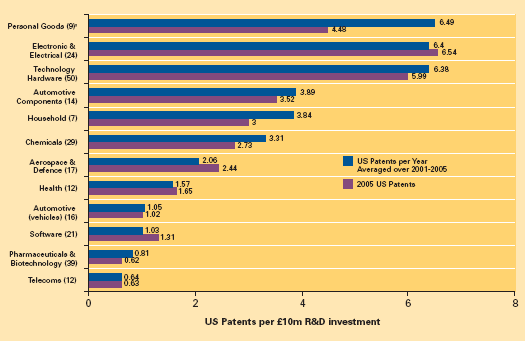
The Scoreboard for the Global 1250 shows that the pharmaceutical sector (along with software) is one of the fasting growing sectors with highest profitability. But it is second place in R&D, just behind technology hardware, putting 6 pharmaceutical companies in the top 20 (compared to none just 10 years ago). However, the number of patents granted per £10million is much lower than those for technology hardware and electronics.

The patent-to-R&D ratio for 12 sectors

According to the Scoreboard, around a quarter of the Global 1250 companies are mid-sized (sales of £50-500 million) with pharmaceutical companies making up 3/4 of these. Pharmaceuticals are the dominant sector in the UK, with the UK having the second largest proportion of pharmaceutical companies of all the top 7 R&D countries (with US having the greatest). Because the UK is particularly strong in pharmaceuticals, the report states that this explains why the UK does not have any companies in the top 20 for 2005 US patents.

Although the centenarian, GSK, is now the second-largest pharmaceutical company in the world (behind Pfizer), but a report in today's IP-Watch suggests that there is a distinct market advantage for small and medium-sized pharmaceuticals (SMEs) when it comes to neglected diseases and diseases in developing countries. Reporting on a seminar at the headquarters of the World Intellectual Property Organization (WIPO), co-organised with the Stockholm Network, IP-Watch notes the importance of "creative licensing deals" and cooperation with larger pharmaceutical companies. On patenting, Nikolaus Thumm, senior economic counsellor of the Swiss Federal Institute of Intellectual Property, told the meeting that there is a need to correct the "common misunderstanding" that the stronger the protection, the more innovation.

Monday, October 16, 2006

EU Trade Pacts - UK Calls for Attention to Development


According to a report today in the Financial Times, UK ministers have written to the European Commissioners for Trade and Development urging greater consideration of development issues when pursuing trade pacts with developing countries, ahead of today's trade meeting in Luxembourg. This comes when India and the EU agreed last week to work towards a new bilateral trade and investment deal by 2009.

In an open letter to Louis Michel, EU Commissioner for Development, and Peter Mandelson, EU Commissioner for Trade, the two ministers - Ian McCartney, UK Trade Minister, and Gareth Thomas, Development Minister - have said, "We are concerned about the current state of the negotiations and want to see these agreements deliver real benefits to ACP [Africa, Caribbean and Pacific] countries."

In particular, as seen in yesterday's post, free trade agreements are being criticised as merely obliging developing economies to accept foreign competition and intellectual property laws in ways that may be detrimental to domestic policies and to economic development. Similar issues are raised in the UK letter to the Commission, revitalising the "Singapore Issues" that have been marginalised in international trade talks. The so-called "Singapore Issues" have been seemingly insoluble due to disagreements over vital development concerns, particularly at the World Trade Organization (WTO) 5th Ministerial Conference in Cancun, 2003. Development remained on the agenda at the 6th Ministerial Conference in Hong Kong, 2005, but since the recent collapse of the Doha Round, development issues are increasingly vulnerable to being silenced through bilateral agreements.

In a recent speech at the London School of Economics and Political Science (LSE), Peter Mandelson said that the EU remains committed to sensitive and "deep" free trade agreements. And in a comment in India's Financial Express, Mandelson reiterates his commitment to the "sensitive issues," saying that the EU-India agreement "would have to be deep and substantive ... We also need to improve the enforcement of rules on the protection of intellectual property rights."

But an article in today's Guardian newspaper, suggests that such agreements may not necessarily be sensitive to development. In the article, Angela Balakrishnan refers to the Commission letter leaked last May, which revealed pressure from Peter Mandelson on the UK Prime Minister, Tony Blair, "to take a more moderate line in Britain's pro-poor country approach to trade liberalisation." As Balakrishnan notes, the Commission accused the UK government of being influenced by celebrities and non-governmental organisations (NGO) in its policies.


Or perhaps it's just a campaign of distraction.